Project DetailsBackgroundResearchInitial DesignsFinal DesignTakeaways
PROJECT DETAILS

Revolutionising Sustainable Fashion with Birl

In the dynamic landscape of sustainable fashion, Birl emerged as a game-changer, envisioning a shift in how users interact with their favourite brands. This case study explores the transformative journey of Birl's user experience (UX) design, aimed at simplifying sustainable fashion for users worldwide.
Role
Lead UX/UI Designer
Client/Project
Birl - MVP eCommerce application
Timeline
6 Weeks
Tools used
Figma, Illustrator, Shopify, Userbrain
PROJECT BACKGROUND

Amidst the growing concerns about the environmental impact of the fashion industry

Birl's mission was clear: redefine the fashion landscape by allowing users to effortlessly trade in older clothing for new items, all while enjoying instant money-off vouchers.
As the lead UX designer, the primary goal was to create a user-friendly platform allowing individuals to seamlessly trade in their older clothing items for new ones.

Goals:

MVP Adoption:

Enhance the MVP to encourage users to actively participate in sustainable practices.

Establish Brand Trust:

Communicate brand commitments transparently, recognizing Birl's status as a newcomer.

Optimize Early Incentives:

Identify and implement motivating incentives for users to trade in old clothing in this early MVP stage.

Initial Thinking

Target users
• Eco-Conscious Enthusiasts
• Convenience-Driven Consumers
• Budget-Conscious Shoppers
Research Methods
• User Surveys
• User Interviews
• Competitor Analysis

How Might We Questions

1. How might we simplify the process of trading in old clothing for users while ensuring a positive impact on the environment?
2. How might we incentivise users to actively participate in a circular fashion economy and choose sustainable practices over traditional shopping?
3. How might we design a platform that caters to diverse user segments, considering varying levels of eco-consciousness and preferences for sustainable fashion
4. How might we leverage technology to streamline the trade-in process for both users and brands, ensuring efficiency and accuracy?
USER RESEARCH

Getting to know the users

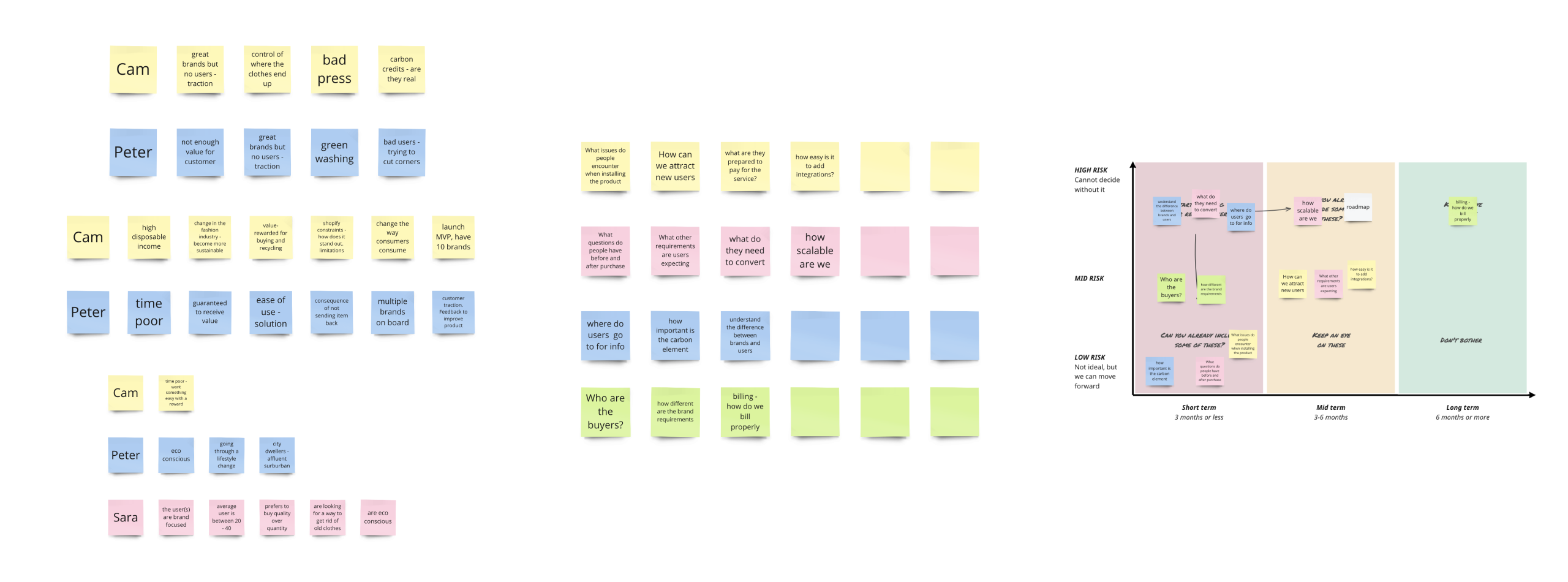
Our journey commenced with an in-depth exploration of Birl's business model. Through comprehensive research methods, including surveys and interviews, we unearthed key insights into user habits, preferences, and challenges within the realm of sustainable fashion. This foundational research became the bedrock for our subsequent design decisions.
Key Findings

• Users are motivated by a desire for eco-friendly practices and transparency.
• Instant discounts are a key incentive for trade-ins.

Research Goals

Understand User Motivations and Pain Points:

Conduct user interviews and surveys to gain insights into the motivations and pain points of individuals regarding sustainable fashion practices.

Evaluate Competitor Landscape:

Conduct an analysis of existing platforms in the sustainable fashion and circular economy space. Identify key features, user experiences, and gaps in the market.

Determine Brand Perception and Trust:

Identify factors that contribute to building trust and loyalty, as well as potential concerns or skepticism users may have regarding the authenticity of sustainability efforts.

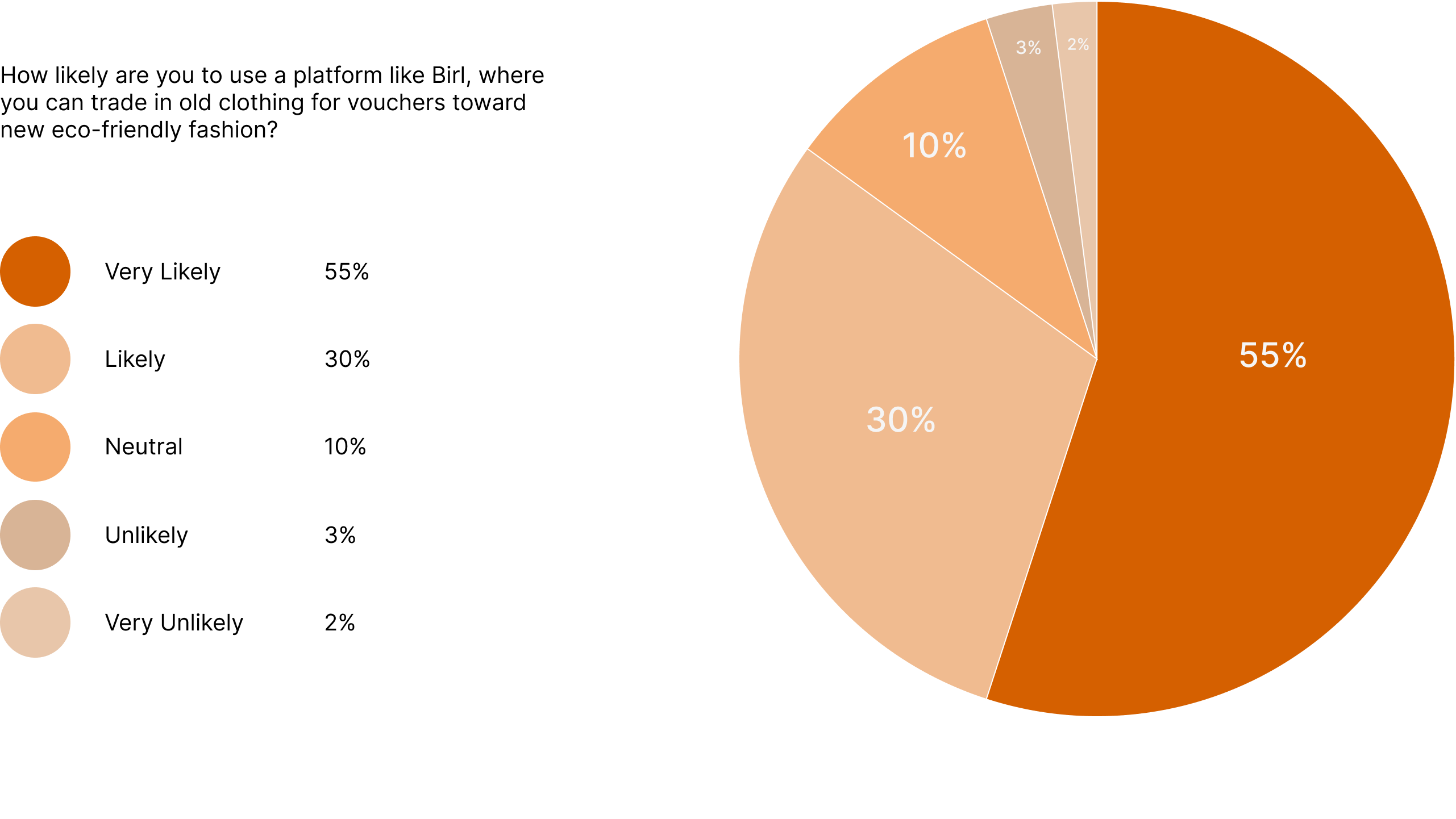
Highlighting the main incentive of Birl's trade-in app

How important is it for you that brands partnering with a trade-in platform like Birl are genuinely committed to sustainability?
70%
Of 100 users said that it is extremely important to them
What type of incentives or rewards would motivate you to trade in your old clothing items?
Instant vouchers or discounts: 80
Exclusive access to new sustainable collections: 40
Donations to a charity of your choice: 60
Other: (Various responses)

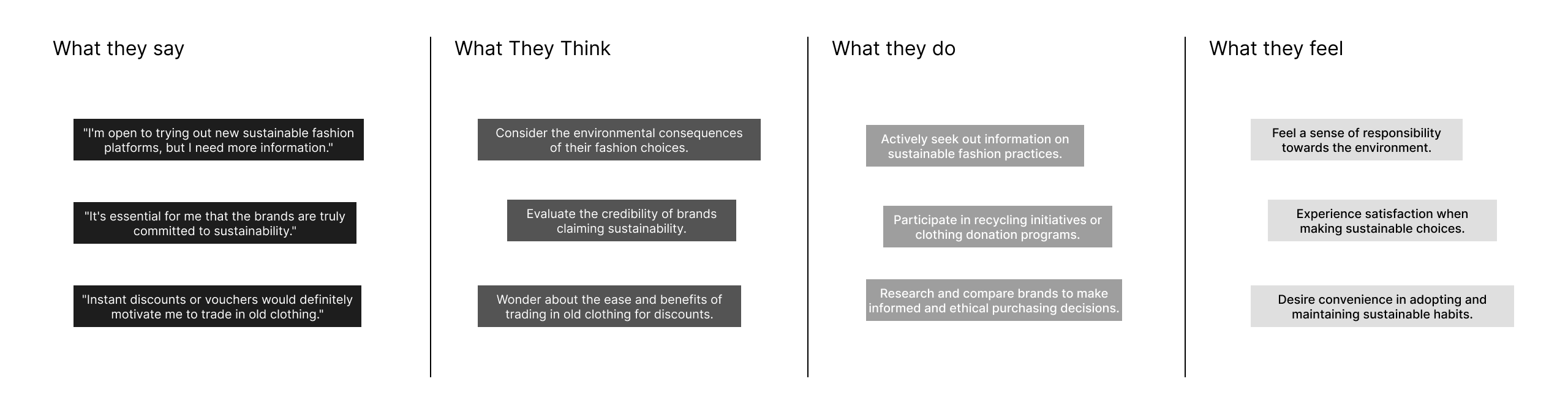
Empathy Map

Research Findings / Pain Points

1. Limited Convenient Recycling Options:
Users may find it challenging to conveniently recycle or repurpose old clothing. Existing options might be limited, requiring effort in terms of time and accessibility.
2. Distrust in Greenwashing:
Users may be skeptical about the authenticity of sustainability claims made by brands, fearing greenwashing.
3. Lack of Immediate Incentives
Users might feel a lack of immediate benefits or incentives for adopting sustainable practices.
4. Complexity in Sustainable Fashion Choices:
Users may find it overwhelming to navigate the complexities of sustainable fashion, including understanding eco-friendly practices and choosing ethical brands.
INITIAL DESIGN

Finding the right approach for users

Guided by insights from the research stage, we navigated the challenges and opportunities within the sustainable fashion space. Birl's founders recognised the need for an intuitive solution to connect brands to the circular economy, paving the way for a transformative UX design.
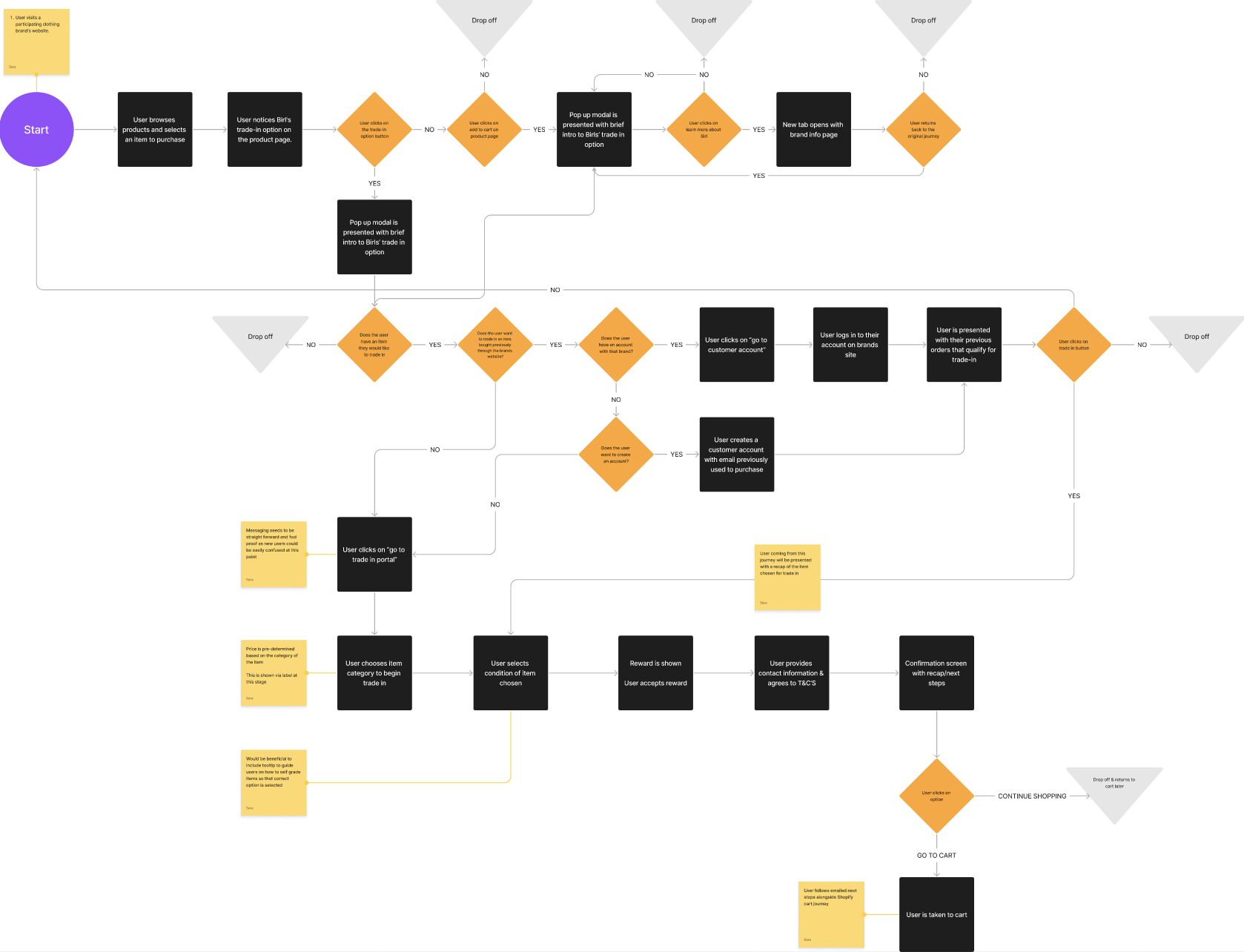
On the face of it, the client’s journey seemed simple. We uncovered the complexity behind the flow and began to expand the map. This allowed us to hide this complexity from the user and provide them with a simple and easy to use product.
Together with the client, we spent a good proportion of time iterating over the journey map. This allowed us to pin point the key areas of the journey that matter most for the users whilst also simplifying any unnecessary steps in the overall journey
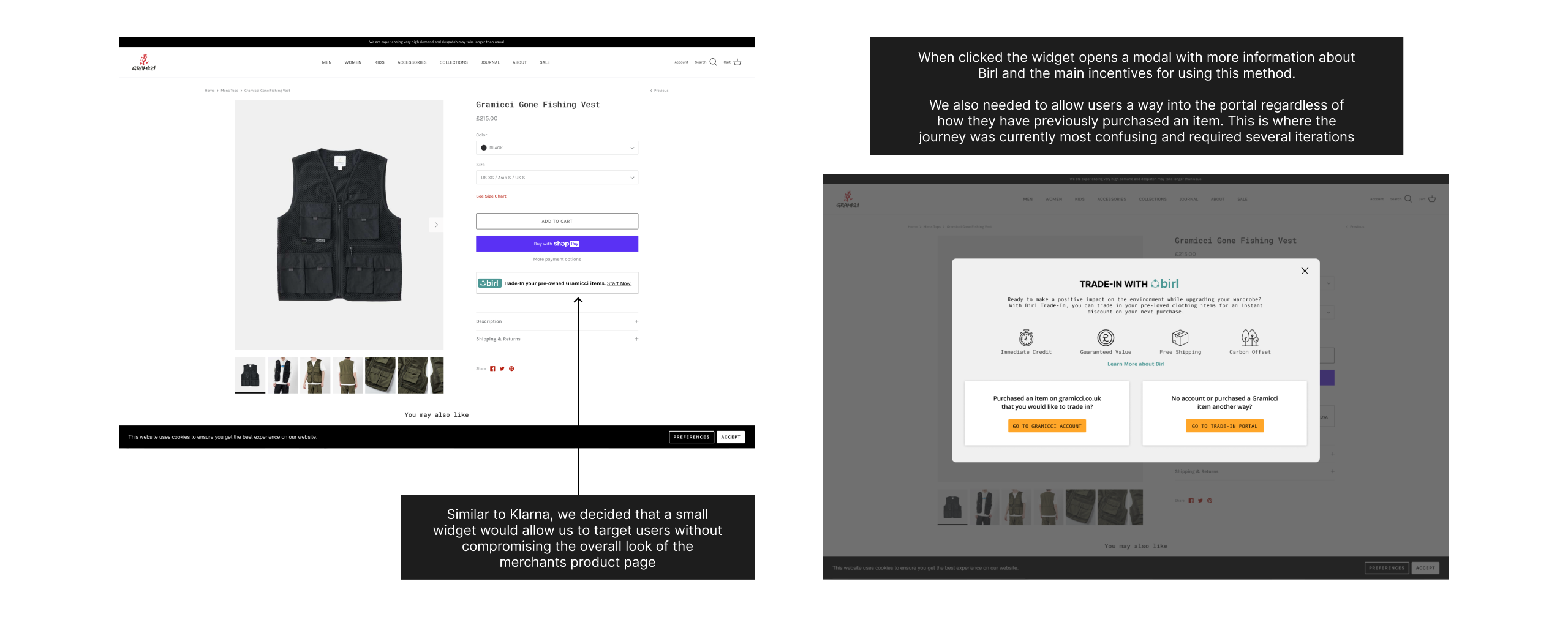
We first needed to identify where the best place would be for the Birl application to begin for users when shopping on a merchants online store.
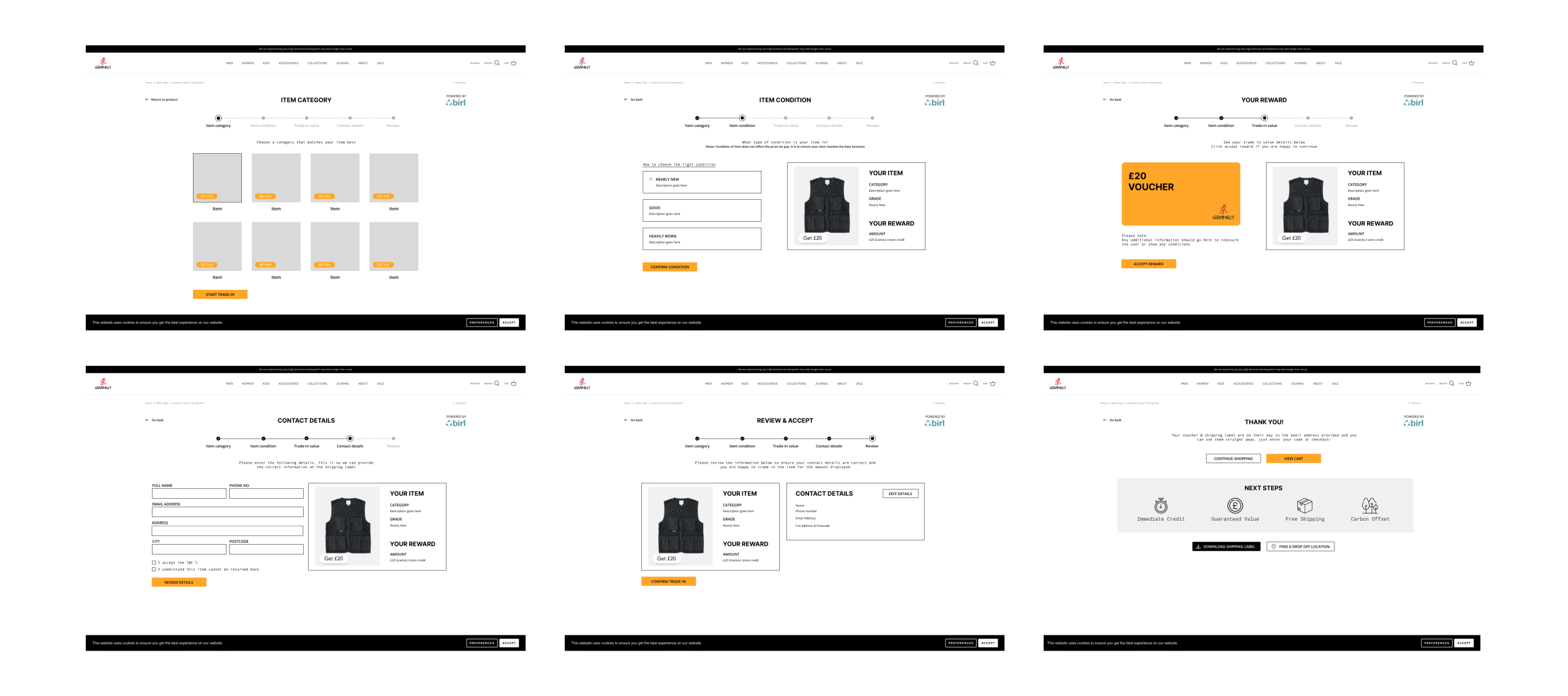
The rest of the wireframes set the foundations for the final design with not a lot of iterations being made other than aesthetic. This was made easy by exploring the complexities earlier on in the process
The intention of the journey remained the same which allowed us to focus more on the UI details as the look and feel was an important part for the client
FINAL DESIGN

Refining findings to create a prototype for demos

The research findings seamlessly flowed into the design process. Armed with a deep understanding of user behaviours and expectations, we embarked on creating a prototype that prioritised a user-friendly interface and a streamlined trade-in process.
Finding a way to attract users whilst also
resulting in a conversion for the merchant
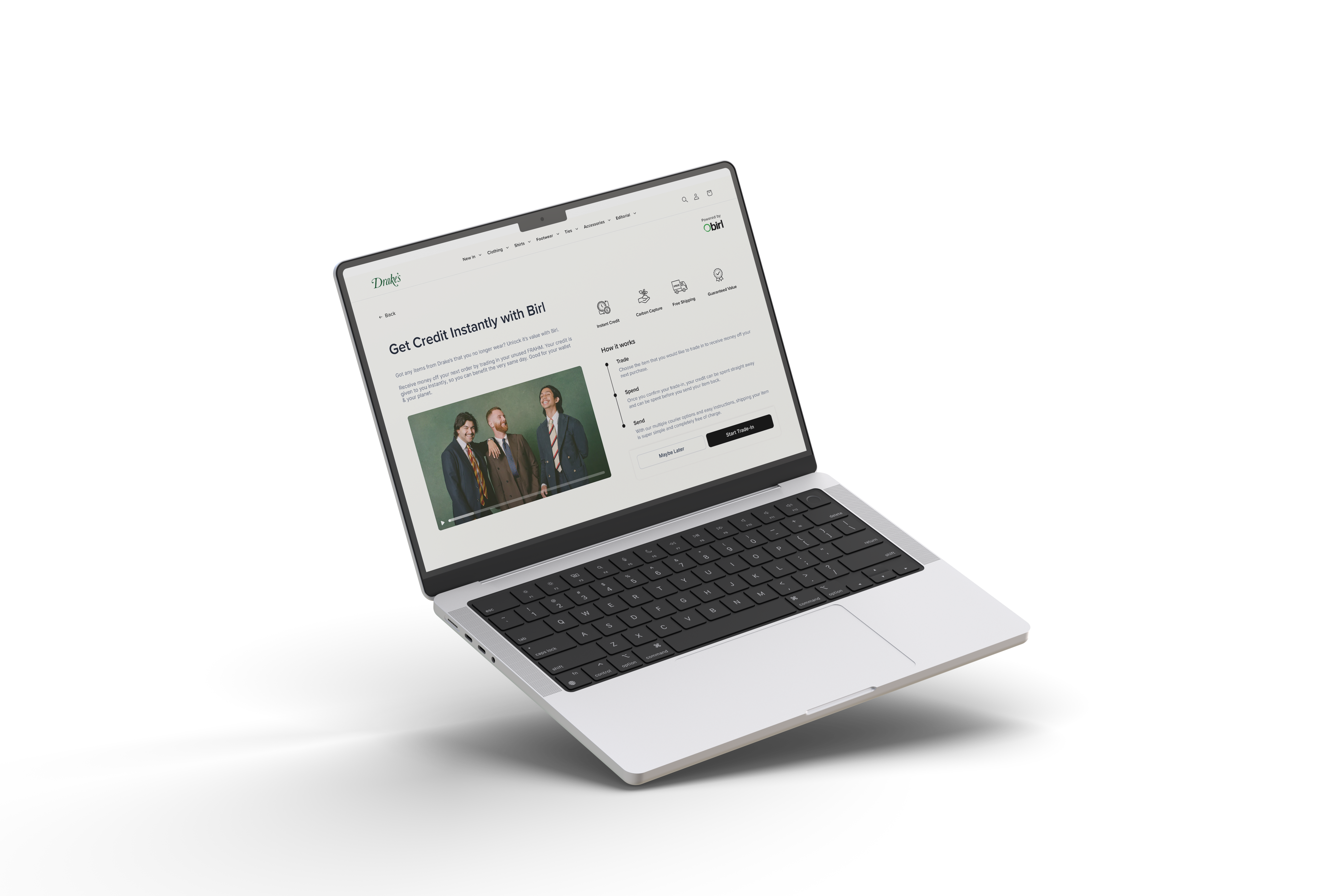
Users enter Birl's portal via a merchants product page / cart.
The reasoning behind this was to target users that are already on route to purchasing a new item, by offering a trade-in incentive at this point it is more likely to convert into a sale, resulting in conversions for both the merchant and Birl.
Optimising Item Identification
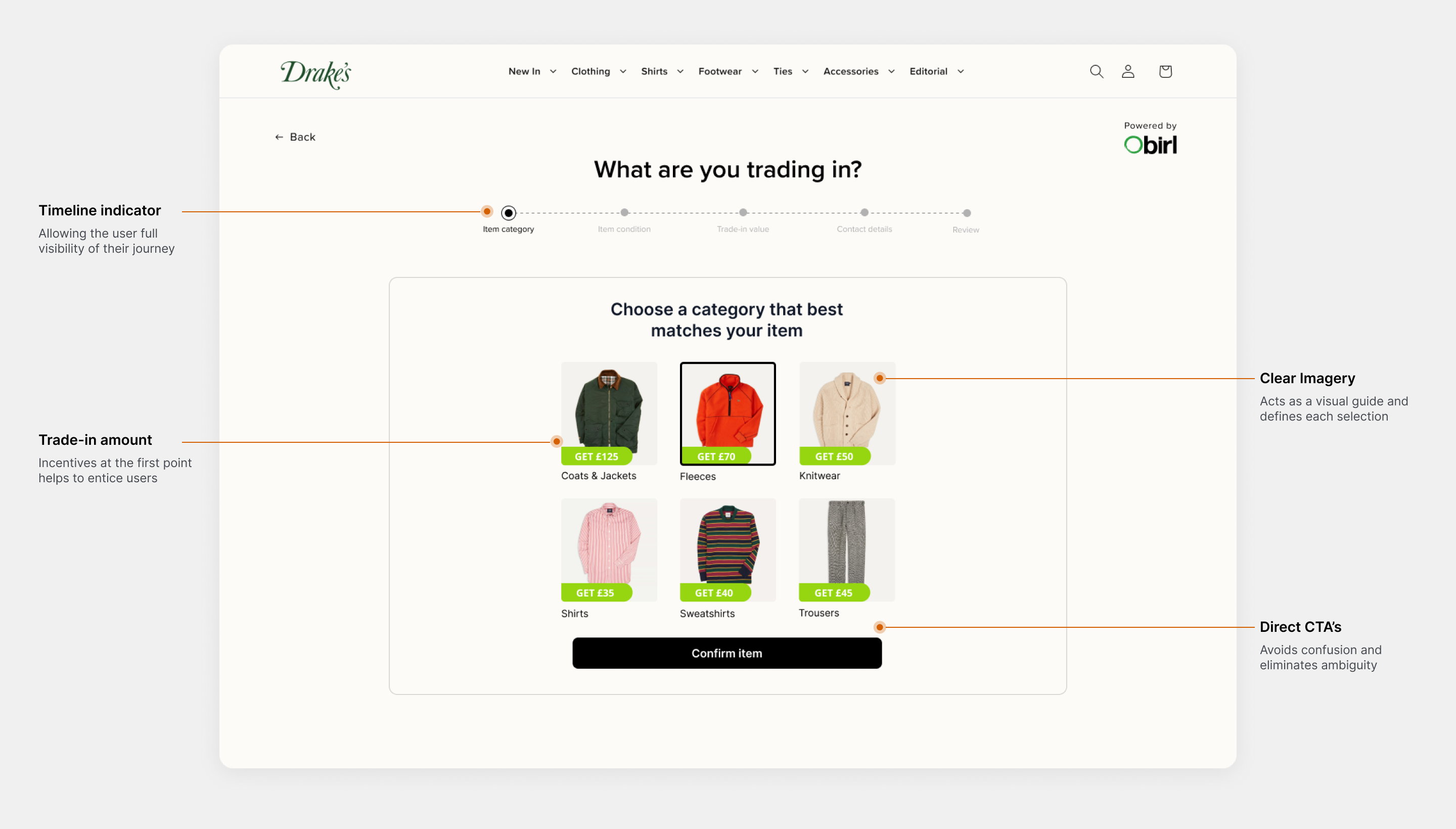
The Category Select Page in Birl's design focuses on optimising the item identification process. This intuitive categorisation ensures that users can effortlessly identify and select the appropriate category for their trade-in items.
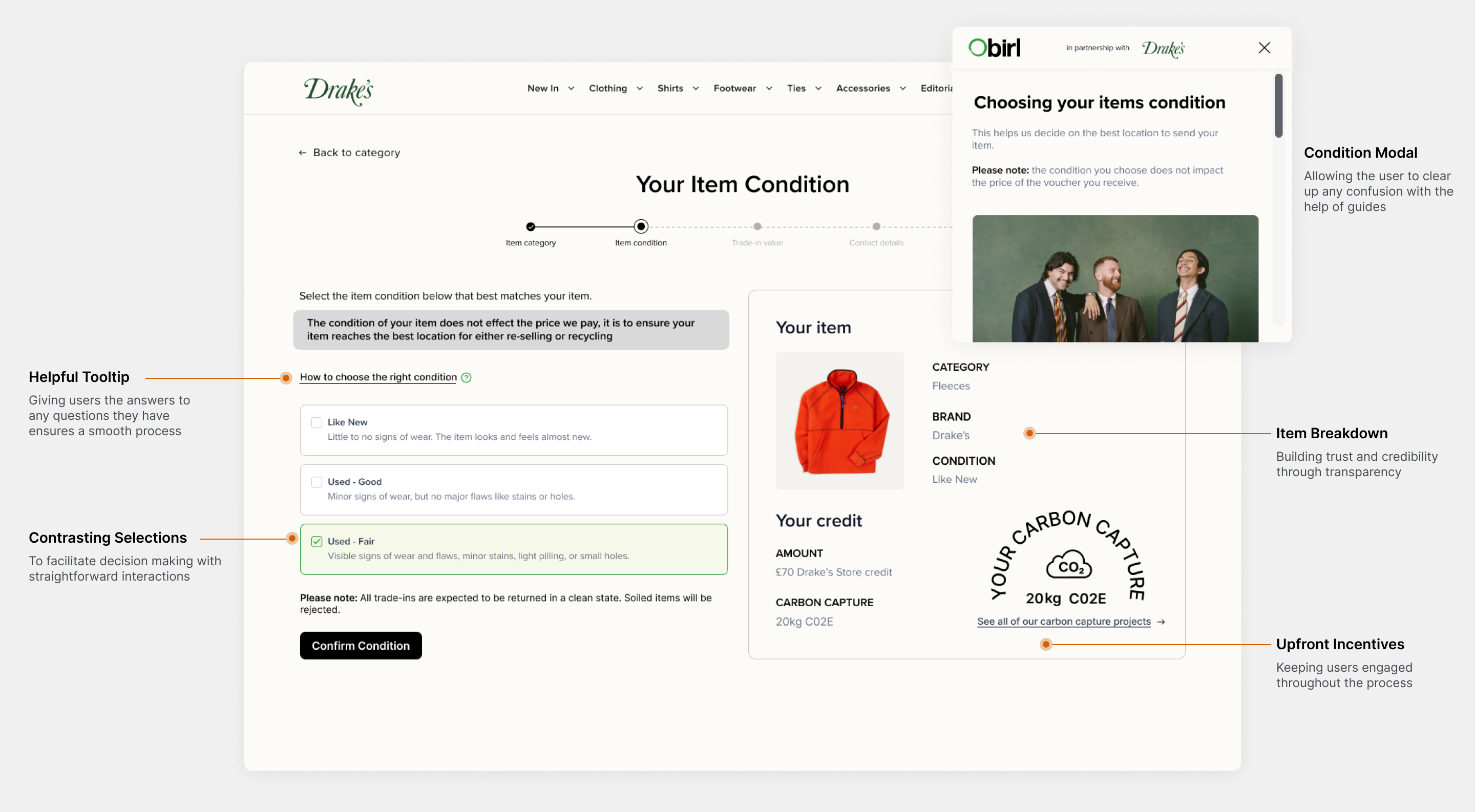
Condition Selection: Enhancing User Trade-In Experience
The condition selection stage of Birl's trade-in process prioritises simplicity and user engagement. This intuitive approach ensures that users, whether new or returning, can easily assess and select the condition that best describes their item.
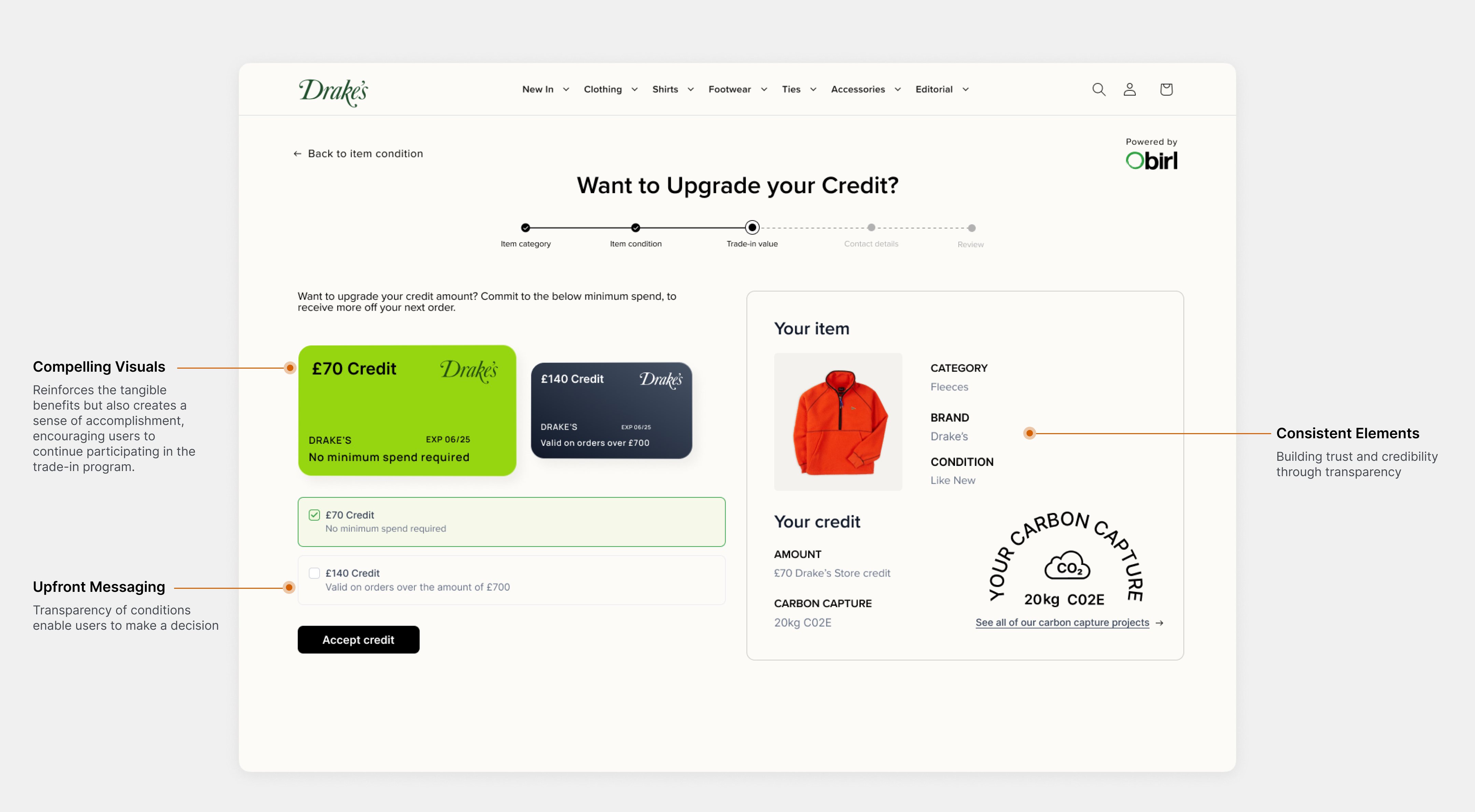
Voucher Options: Instant Gratification
The Voucher Page of Birl's design focuses on providing users with instant gratification. Upon completing the trade-in process, users are immediately presented with their money-off voucher, reinforcing the value of their sustainable actions.
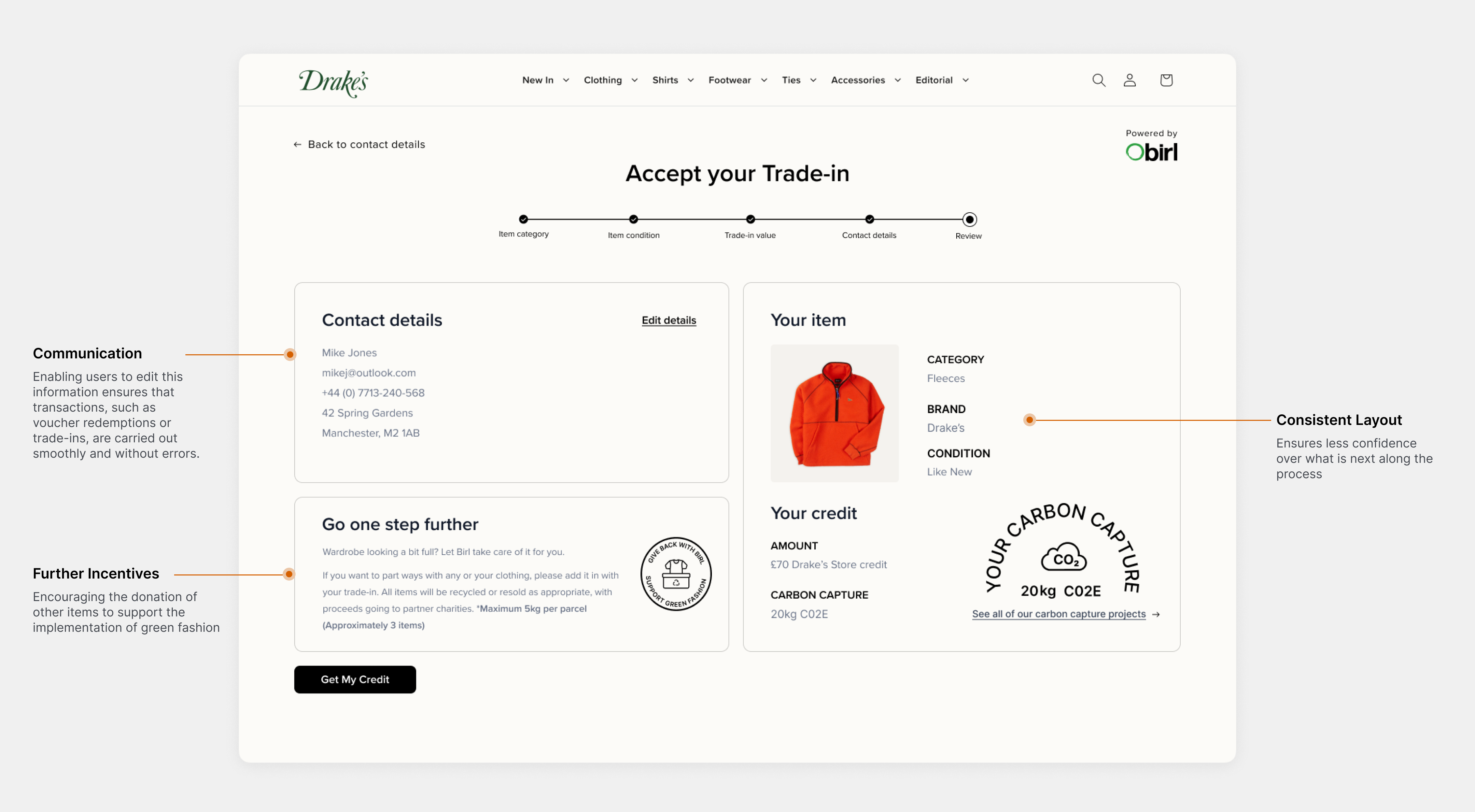
Review & Accept: Bringing it all together
The review details screen plays a crucial role in ensuring transparency, providing users with a final opportunity to verify and adjust information before finalising their sustainable action.

Prototype

The final design emphasised simplicity, transparency, and user engagement. Collaborating closely with developers ensured a smooth implementation, overcoming challenges like integrating real-time brand data.
TAKEAWAYS

Results & Challenges

The implementation of the refined UX design for Birl yielded impactful results and valuable lessons. Key performance indicators and user feedback post-launch showcased a notable improvement in user engagement and satisfaction. The streamlined trade-in process contributed to a significant uptick in user interactions, with a noticeable boost in successful transactions.
User Engagement Enhancement:
30% increase in successful trade-in transactions.
Streamlined trade-in processes contributed to a substantial surge in user interactions
User Satisfaction Boost:
25% rise in positive user feedback.
The refined UX design successfully elevated user satisfaction levels.
Critical Lessons Learned:
Greenwashing Mitigation: Addressing user concerns about greenwashing, ensuring transparency in recycling processes.
Balancing Act: Navigating the delicate equilibrium between incentives and sustainability principles.
Agile Adaptation and Communication:
Ongoing adjustments based on user feedback.
Continuous communication and adaptability were pivotal for agile improvements.
MORE CASE STUDIES
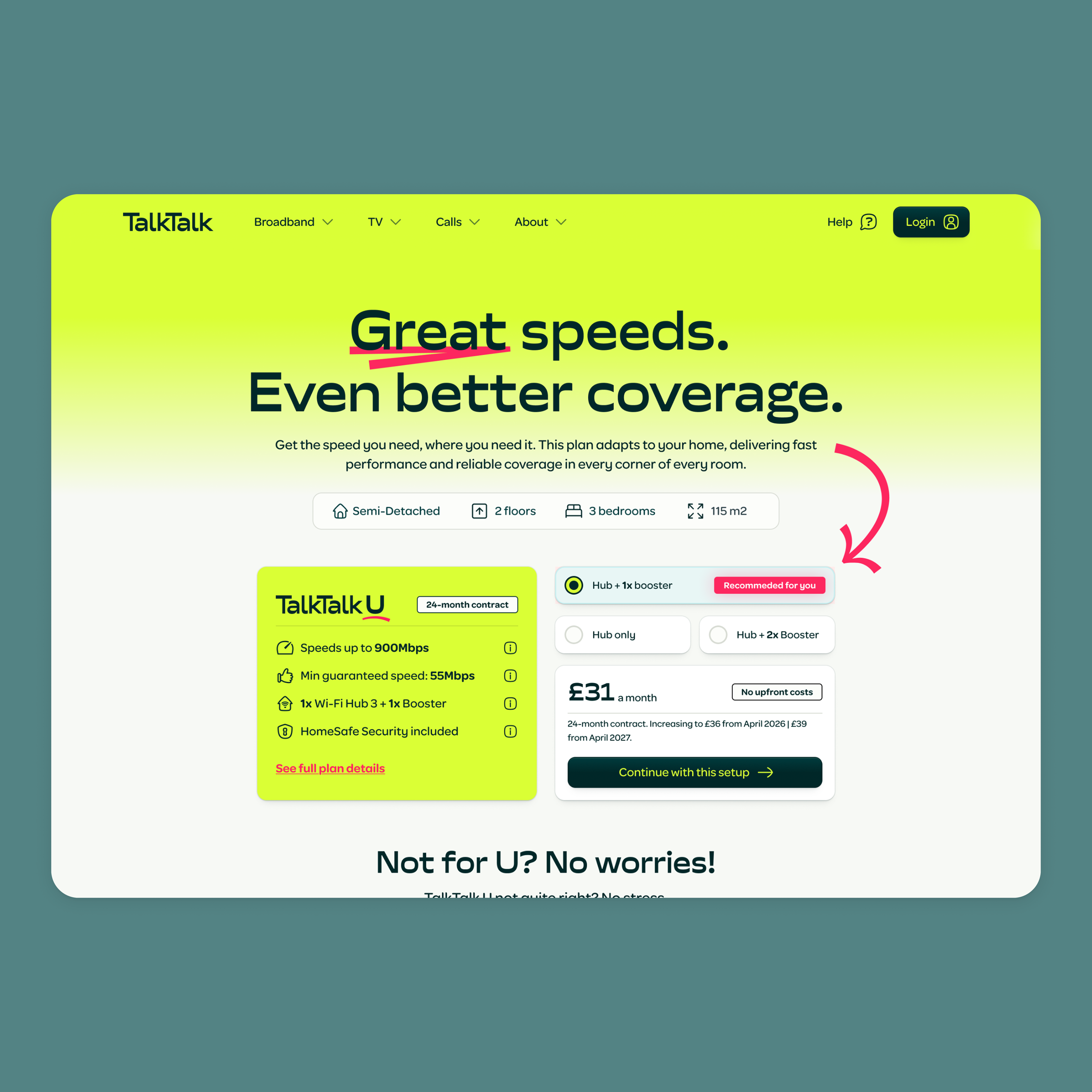
Launching an Industry First Proposition
Designed a new broadband experience combing speed + full-home coverage, driving 900+ sales.
Previous Case Study
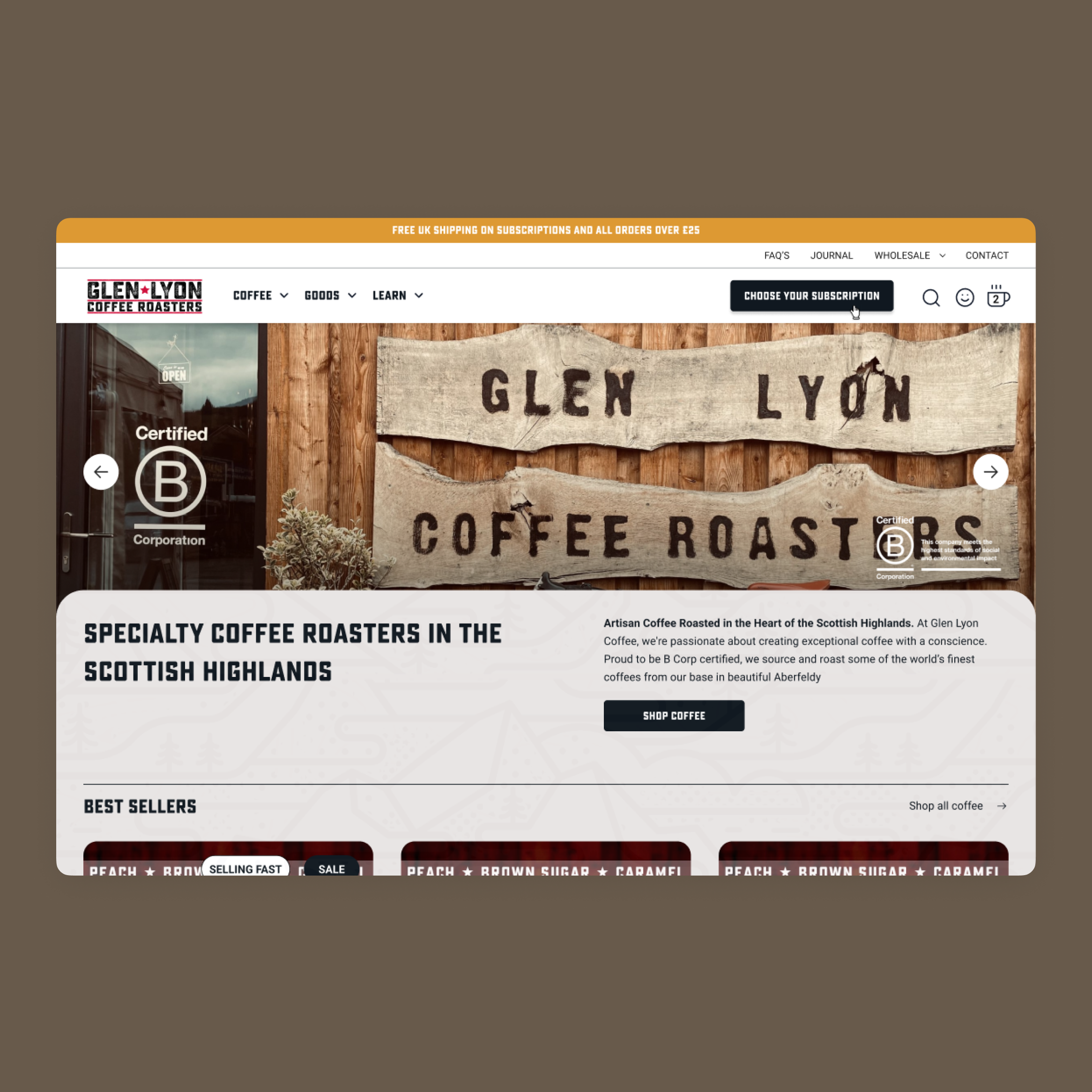
Glen Lyon Coffee Roasters
Redesigning their existing online store by enhancing the experience to improve sales.
Next Case Study